


KP1
EST:
Tartu Ülikooli peahoone (Ülikooli 18, https://maps.app.goo.gl/4gFMS9bH5LJbpXdA8)
Siin asus õigusteaduskond hoone valmimisest 1809. aastal kuni 1997. aastani. Peahoones meenutavad seda kaks mälestustahvlit: üks on pühendatud kolmele esimesele eestlasest õppejõule (Ants Piip, Nikolai Maim ja Jüri Uluots) ning teine kahele välismaalasest õppejõule Eesti Vabariigi Tartu Ülikooli alguspäevilt (rootslane Andreas Bjerre ja ungarlane István Csekey).
19. sajandil tähistas peahoone ees olev kett sümboolset piiri linnapolitsei ja ülikooli võimu vahel. Kui näiteks linnas pahandust teinud üliõpilane jõudis üle keti hüpata, ei tohtinud linnapolitsei teda enam puutuda. Professoritest moodustatud kohus saatis siis pahategija pööningul asuvasse kartserisse õiglast karistust kandma.
Kartserid olid tähtis osa ülikooli autonoomset kohtusüsteemist. Üks toonasest kuuest kartserist on taastatud ja see asub peahoone vasaku tiiva pööningul. Kartseri külastamiseks tuleb pöörduda ülikooli kunstimuuseumisse.
Vt ka Ken Ird, Kristiina Tiideberg (2023). Tartu Ülikooli kartseri lood.
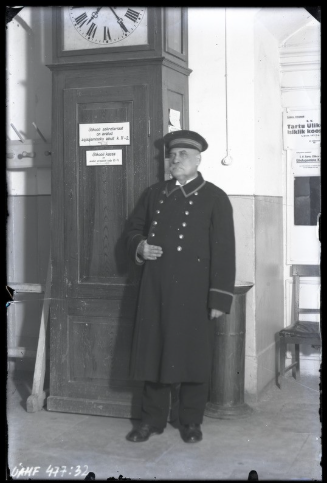
Tartu Ülikooli peahoone uksehoidja Friedrich Simon seismas peahoones kappkella kõrval (autor teadmata, 1929–1930)
Tartu Ülikooli muuseum, https://opendata.muis.ee/object/3838038.
ENG:
University of Tartu main building (Ülikooli 18, https://maps.app.goo.gl/4gFMS9bH5LJbpXdA8)
The Faculty of Law was located here from the completion of the building in 1809 until 1997. There are two memorial plaques in the main building to recall this: one is dedicated to the first three Estonian-born members of the teaching staff (Ants Piip, Nikolai Maim and Jüri Uluots), and the other to two foreigners (the Swede Andreas Bjerre and the Hungarian István Csekey) who taught at the University of Tartu in the early years of the Republic of Estonia.
In the 19th century, the chain in front of the main building marked the symbolic border between the authority of the city police and the university. For example, if a student who had caused trouble in town managed to jump over the chain, the city police were no longer allowed to touch him. A court formed of professors then sent the culprit to serve a just punishment in the lock-up in the attic.
Lock-ups were an important part of the university’s autonomous court system. One of the six original cells has been restored and is located in the attic in the left wing of the main building. To visit the lock-up, contact the University of Tartu Art Museum.
See also: Ken Ird, Kristiina Tiideberg (2023). Tales of the Lock-up of the University of Tartu.
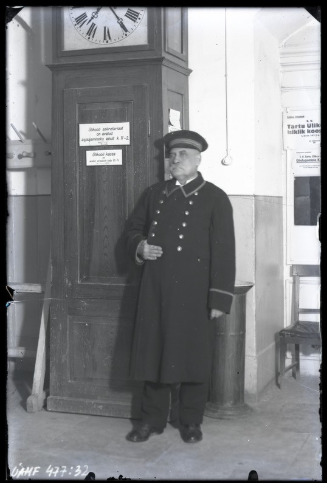
Friedrich Simon, doorkeeper of the University of Tartu, standing next to the hall clock in the main building (author unknown, 1929–1930)
University of Tartu Museum, https://opendata.muis.ee/object/3838038.