


KP18
EST:
Eesti Vabariigi Riigikohus (Lossi 17, https://maps.app.goo.gl/2fHu2ihN4wvHosgM7)
Vene impeeriumi koosseisus oli Eesti- ja Liivimaal kummalgi oma kohtuasutuste süsteem, aga mõlema kõrgeim kohtuinstants oli Venemaa Keisririigi Valitsev Senat, mis asus Peterburis. Pärast Eesti riigi iseseisvumist tuli luua uus kohtute süsteem.
Saksa okupatsiooni järel, 18. novembril 1918 andis Eesti Ajutine Valitsus välja määruse „Ajutiste kohtute sisseseadmise üle“. Selle esimese punkti alapunktis h sätestati, et tuleb luua Kõrgem Riigikohus. Asutav Kogu võttis 21. oktoobril 1919 vastu Riigikohtu seaduse ja juba järgmisel aastal alustas Riigikohus tegevust. Selle asukohaks määrati Tartu, et kohtuametnikud saaksid kasutada ülikooli raamatukogu ja ülikooliga seotud õigusteadlased võiksid Riigikohtu tegevuses kaasa lüüa. Riigikohtu esimene istung toimus 14. jaanuaril 1920 Tartu raekoja saalis.
Juba 18. sajandil, kui hakati kujundama võimude lahususele rajatud riigikorraldust, lähtuti põhimõttest, et maa kõrgeim kohus peaks olema valitseja residendilinnast vähemalt päevateekonna kaugusel, et valitseja ei saaks kohtu õigusemõistmisse otseselt sekkuda. Tollal liiguti hobustega ja selles tempos võtnuks Tallinnast Tartusse jõudmine aega palju rohkem kui ühe päeva. Kuid autoritaarse valitsemiskorra ajal 1935. aastal viidi Riigikohus üle Tallinna, keskvõimule lähemale.
Eesti Vabariigi annekteerimine ja okupeerimine 1940. aastal tõi kaasa Riigikohtu likvideerimise. Viimane istung peeti 31. detsembril 1940 Tallinnas.
Pärast Eesti Vabariigi iseseisvuse taastamist pani 28. juunil 1992 rahvahääletusel vastu võetud Eesti Vabariigi põhiseadus aluse omariiklike kohtuorganite taasloomisele. Riigikogu valis taasalustanud Riigikohtu esimeheks Rait Maruste ja esimene avalik istung toimus 27. mail 1993 samas kohas, kus 73 aastat varemgi – Tartu raekoja saalis. Ka praegu asub Riigikohus kui Eesti Vabariigi kõrgeim kohus ülikoolilinnas Tartus. Õigusteaduskonnale sai see 1990. aastate keskel peaaegu saatuslikuks, sest mitu teaduskonna õppejõudu lasi end valida riigikohtunikuks. Enamasti jätkasid nad siiski ülikoolis õpetamist. Praegu toimib koostöö ka teistpidi: paljud õigusteaduskonna õppejõud töötavad Riigikohtus nõunike ja konsultantidena.
Hoone, kus Riigikohus 1995. aastast asub, ehitati 18. sajandil sõjaväehaiglaks. Pärast Toomemäe kinkimist 1799. aastal tulevasele ülikoolile ja selle taasavamist 1802. aastal ehitati maja ümber ülikooli kliinikuks. 19. sajandi keskel sai hoone juurdeehitusega tänini püsinud ilme.
Vt ka:
- Ajalugu. – Riigikohtu kodulehekülg, https://www.riigikohus.ee/et/riigikohus/ajalugu.
- Kaspar Koort (2019). Riigikohtu külje alt tuli välja ammune ühishaud. – Postimees, 16. juuli, https://tartu.postimees.ee/6731617/riigikohtu-kulje-alt-tuli-valja-ammune-uhishaud.
- Toomas Anepaio (1992). Eesti Vabariigi Riigikohtu loomisest. – Eesti Jurist, 403–407.
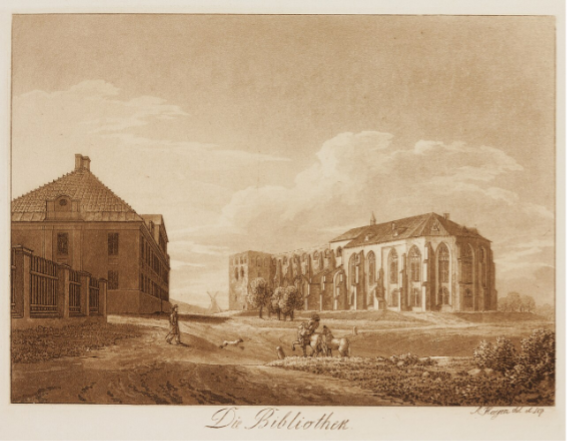
Ülikooli kliinikum ja raamatukogu (autor August Matthias Hagen, 1827)
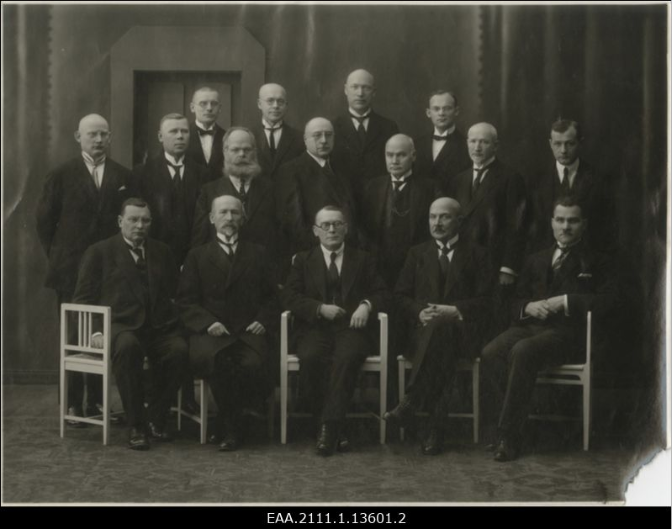
Eesti Vabariigi riigikohus, 1925 (autor Armin Lomp)
Rahvusarhiiv, https://www.ra.ee/fotis/index.php/et/photo/view?id=446560&_xr=69c2412867122.
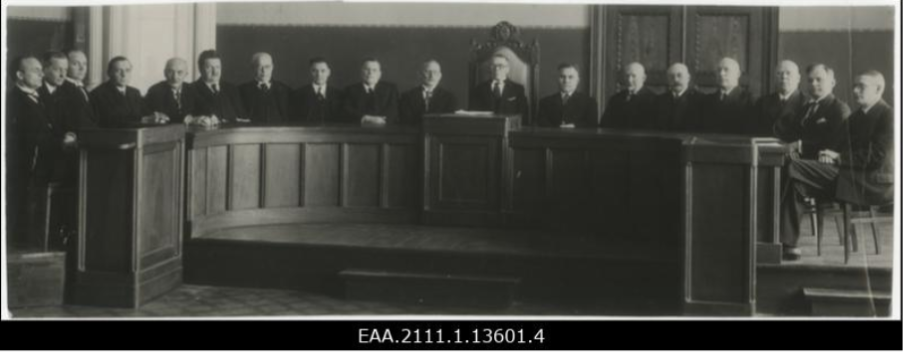
Riigikohtu viimane istung Tartus 1935. aastal (autor teadmata)
Rahvusarhiiv, https://www.ra.ee/fotis/index.php/et/photo/view?id=446566&_xr=69be551a6d927.
ENG:
Supreme Court of Estonia (Lossi 17, https://maps.app.goo.gl/2fHu2ihN4wvHosgM7)
Within the Russian Empire, both the Governorates of Estonia and Livonia had their own court systems, but the highest judicial authority for both was the Governing Senate of the Russian Empire, located in Saint Petersburg. After Estonia gained independence, a new judicial system needed to be established.
After the German occupation, on 18 November 1918, the Estonian Provisional Government issued a regulation establishing temporary courts. Sub-paragraph (h) of its first clause stipulated that a Supreme Court was to be established. On 21 October 1919, the Constituent Assembly adopted the Supreme Court Act, and the Supreme Court began its work the following year. Tartu was designated as its seat so that court officials could use the university library and legal scholars associated with the university could participate in the court’s work. The first session of the Supreme Court took place on 14 January 1920 in the hall of Tartu Town Hall.
As early as the 18th century, when systems of government based on the separation of powers began to take shape, the guiding principle was that a country’s highest court should be located at least a day’s journey away from the ruler’s city of residence, so that the ruler could not intervene directly in the administration of justice. At that time, travel was by horse, and at such a pace, the journey from Tallinn to Tartu would have taken far more than one day. However, in 1935, during the period of authoritarian rule, the Supreme Court was relocated to Tallinn, closer to the central authority.
The annexation and occupation of the Republic of Estonia in 1940 led to the dissolution of the Supreme Court. Its final session was held on 31 December 1940 in Tallinn.
After the restoration of Estonia’s independence, the Constitution of the Republic of Estonia, adopted by referendum on 28 June 1992, laid the foundations for the re-establishment of national judicial institutions. The Riigikogu elected Rait Maruste as Chief Justice of the reconstituted Supreme Court, and its first public session was held on 27 May 1993 in the very same place as 73 years earlier – the hall of Tartu Town Hall. Today, too, the Supreme Court, the highest court of the Republic of Estonia, is located in the university city of Tartu. For the Faculty of Law, this almost proved fatal in the mid-1990s, as several of its academic staff members were elected as Supreme Court justices. In most cases, however, they continued teaching at the university. Today, cooperation also works in the reverse direction: many teaching staff members of the Faculty of Law work at the Supreme Court as advisers and consultants.
The building in which the Supreme Court has been housed since 1995 was constructed in the 18th century as a military hospital. After Toome Hill was donated in 1799 to the future university and the university was reopened in 1802, the building was converted into a university clinic. In the mid-19th century, an extension gave the building the appearance it retains to this day.
See also:
- Ajalugu. – Website of the Supreme Court, https://www.riigikohus.ee/et/riigikohus/ajalugu.
- Kaspar Koort (2019). Riigikohtu külje alt tuli välja ammune ühishaud. – Postimees, 16 July, https://tartu.postimees.ee/6731617/riigikohtu-kulje-alt-tuli-valja-ammune-uhishaud.
- Toomas Anepaio (1992). Eesti Vabariigi Riigikohtu loomisest. – Eesti Jurist, 403–407.
University hospital and library (author August Matthias Hagen, 1827)
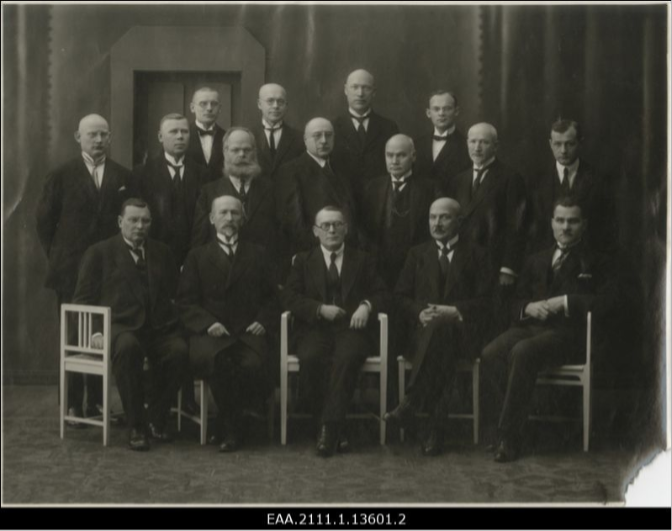
Supreme Court of Estonia, 1925 (author Armin Lomp)
National Archives of Estonia, https://www.ra.ee/fotis/index.php/et/photo/view?id=446560&_xr=69c2412867122.
Last session of the Supreme Court in Tartu in 1935 (author unknown)
National Archives of Estonia, https://www.ra.ee/fotis/index.php/et/photo/view?id=446566&_xr=69be551a6d927.