


KP7
EST:
Katoliku kirik ja poolakad ülikoolis (Veski 1a, https://maps.app.goo.gl/CPXfsij6GZqiZzJHA)
Pärast Eesti territooriumi minekut Rootsi võimu alla 17. sajandil ei olnud siin pikka aega ühtki katoliku kirikut. 19. sajandil tuli aga Tartusse ülikooli õppima palju poolakaid, sest Poola ülestõusude tõttu sulges tsaarivõim lühemaks või pikemaks ajaks nii Varssavi kui ka Vilniuse ülikooli. Enamik poolakaid olid katoliiklased. Nende usuvajaduste rahuldamiseks pandi ülikoolis 19. sajandi keskel ametisse katoliku usuõpetaja. Temast sai ühtlasi kõigi Tartus elavate katoliiklaste vaimulik, kelle ümber tekkis ka kogudus. Kuna see hakkas järjest kasvama ja soovis enesele ühel hetkel kirikuhoonet, osteti Tähtvere mõisalt krunt, kuhu ehitati aastatel 1862–1899 arhitekt Wilhelm Schillingi projekti järgi uusgooti stiilis kirikuhoone.
Poolakatele jäi Tartu tähtsaks õppimispaigaks ka 20. sajandi algul. Neil olid siin oma üliõpilasorganisatsioonid ja vilgas kultuurielu. Ka Poolas hoidsid Tartus õppinud ehk „dorpatšikud“ kokku ning nende seast sirgus palju Poola ajaloos ja kultuuris mõjukaid isikuid. Näiteks lõpetas 1911. aastal Tartus õigusteaduskonna Wladyslaw Raczkiewicz (1885–1947), kellest sai 1939. aastal Poola president eksiilis. Õigusteaduskonna õppehoone Iuridicumi fuajeesse (Näituse 20) on tema auks paigaldatud mälestustahvel.
Vt ka Lea Leppik (2011). Lehrstühle für römisch-katholische und griechisch-katholische Religionsunterricht in der Universität Dorpat während des 19. Jahrhunderts. – Estnische Kirchengeschichte im vorigen Jahrtausend, 125–137.
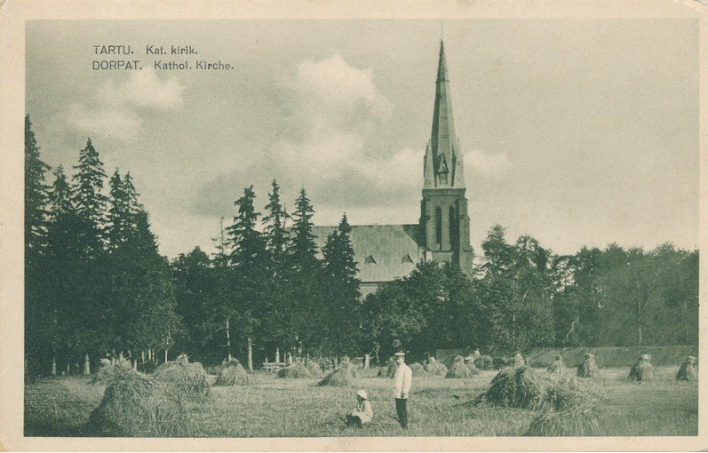
Katoliku kirik Tähtvere mõisa põllu ääres (autor teadmata, 1910-ndad)
Tartu Linnamuuseum, https://opendata.muis.ee/object/2850738.
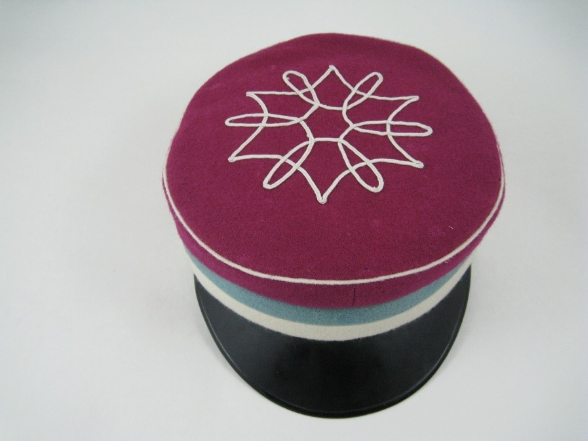
1828. aastal Tartus asutatud vanima Poola üliõpilaskorporatsiooni Polonia tekkel (autor teadmata)
Tartu Ülikooli muuseum, https://opendata.muis.ee/object/216511.
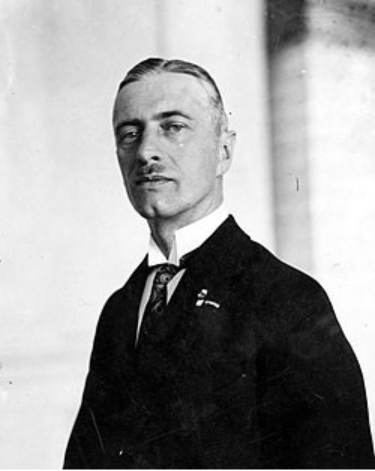
Wladyslaw Raczkiewicz 1930. aastal (autor teadmata)
Vikipeedia, https://en.wikipedia.org/wiki/W%C5%82adys%C5%82aw_Raczkiewicz.
ENG:
Catholic church and the Polish community at the university (Veski 1a, https://maps.app.goo.gl/CPXfsij6GZqiZzJHA)
After the Estonian territory fell under Swedish rule in the 17th century, there were no Catholic churches here for a long time. In the 19th century, however, many Poles came to Tartu to study at the university because the Tsarist authorities had closed both the University of Warsaw and the University of Vilnius for varying periods due to the Polish uprisings. Most Poles were Catholic. To meet their religious needs, a Catholic teacher was appointed at the university in the mid‑19th century. He became the priest for all Catholics living in Tartu, and a congregation formed around him. As the congregation grew and wished to have a church of its own, a plot of land was purchased from Tähtvere manor. Between 1862 and 1899, a neo-Gothic church was built there to the design of architect Wilhelm Schilling.
Tartu remained an important place of study for Poles also in the early 20th century. The Polish students had their own organisations and a lively cultural life. Those who had studied in Tartu maintained close ties after returning to Poland, and many went on to play significant roles in Polish history and culture. For example, Władysław Raczkiewicz (1885–1947), who graduated from the Faculty of Law in Tartu in 1911, became President of Poland in exile in 1939. In his honour, a memorial plaque has been installed in the lobby of Iuridicum, the School of Law building (Näituse 20).
See also Lea Leppik (2011). Lehrstühle für römisch-katholische und griechisch-katholische Religionsunterricht in der Universität Dorpat während des 19. Jahrhunderts. – Estnische Kirchengeschichte im vorigen Jahrtausend, 125–137.
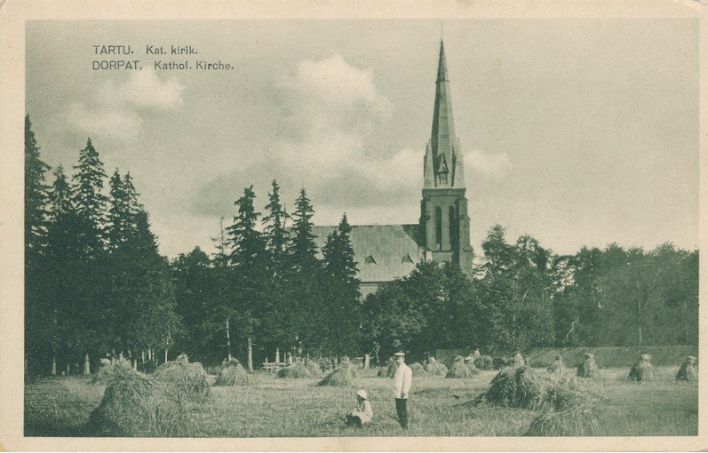
Catholic church at the field of Tähtvere manor (author unknown, 1910s).
Tartu City Museum, https://opendata.muis.ee/object/2850738
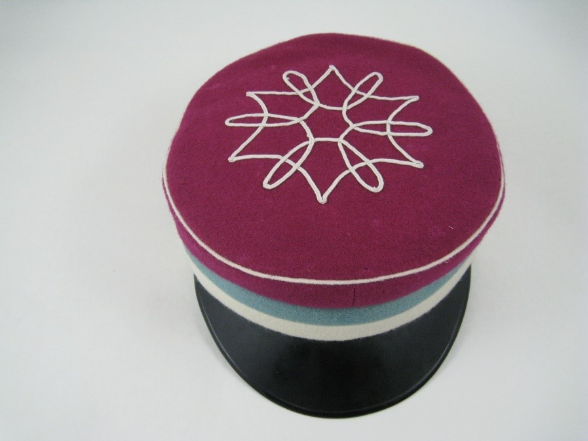
Cap of the oldest Polish student corporation in Tartu, Polonia, founded in 1828 (author unknown)
University of Tartu Museum, https://opendata.muis.ee/object/216511.
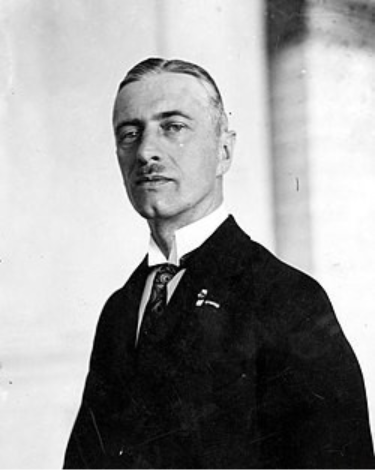
Władysław Raczkiewicz in 1930 (author unknown)
Wikipedia, https://en.wikipedia.org/wiki/W%C5%82adys%C5%82aw_Raczkiewicz.