


KP9
EST:
Kohtumaja (Veski 32, https://maps.app.goo.gl/BbP9U7bhyRaDpo1e9)
Veski tänav oli vähemalt alates 18. sajandist Tartu linna ja Tähtvere mõisa piir. Juba 19. sajandil kerkis linnatüüpi maju ka tänava mõisapoolsele küljele. Kuna linn tahtis kasvada ja mõisnikul oli raha vaja, hakkas ta oma maid kruntideks müüma. Endistele mõisamaadele kerkisid katoliku kirik, Tartu raudteejaam, näituseväljak (sellest ka Näituse tänava nimetus), samuti Mihhail Rostovtsevi eraülikool loodus- ja arstiteaduse õppimiseks. Kuid linna halduspiire ei laiendatud ning nii kehtis tänava ühel poolel linnaõigus ja teisel poolel maaõigus, nagu need olid kujunenud juba keskajal. See tähendas, et ka näiteks politsei oli neil aladel erinev.
Kuigi 1920. aastal kaotati Eesti Vabariigis seisused ja linna ümbritsenud mõisate maad liideti varsti linnaga, jäid vanad õiguspiirkondade piirid eraõiguslikes suhetes alles. Nii jätkus näiteks kinnistusraamatutes maade jaotamine linna- ja mõisamaaks.
Linna- ja maaõiguse piir kulges mööda Veski tänavat kuni 1940. aastani, mil Nõukogude võim korraks kogu õigussüsteemi ümber tegi. Saksa okupatsiooni ajal 1941–1944 kehtestati aga taas Eesti Vabariigi aegne eraõigus. See tulenes 19. sajandi keskpaigas jõustunud Balti eraseadusest, millesse oli koondatud kogu eelmodernse aja õiguslik paljusus. Eesti Vabariigi ajast on teada näiteks hobusemüügi kaasus, kus seesama õiguspiir osutus vägagi määravaks. Nimelt sai „müügiesemel“ hiljem avastatud vigade pärast maaõiguse järgi lepingust taganeda kuni kuus kuud, linnaõiguse järgi oli selleks aega vaid kaheksa päeva.
Veski 32 maja ehitati tsaariajal Tartu-Võru rahukogu hooneks tollases seadustekogus ette nähtud kreisikohtuhoone tüüpprojekti järgi. See oli pikka aega Eesti Rahva Muuseumi peamaja, enne teist maailmasõda lühikest aega Riigikohtu ja siis Tartu Ringkonnakohtu hoone.
Vt ka Toomas Anepaio (1997). Hobusemüügist omandireformini. – Juridica, 6, 288−294.
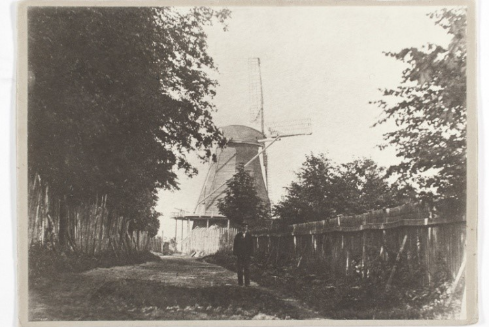
Tähtvere mõisa veski, mis andis tänavale nime ja mis lammutati 1890ndatel (autor Wilhelm Staden)
Eesti Rahva Muuseum, https://opendata.muis.ee/object/654678.
ENG:
Courthouse (Veski 32, https://maps.app.goo.gl/BbP9U7bhyRaDpo1e9)
Veski street marked the boundary between the city of Tartu and Tähtvere manor from the 18th century. Already in the 19th century, townhouses were also built on the manor side of the street. As the city was growing and the manor lord needed money, he began dividing his land into plots and selling them. On the former land of the manor, the Catholic church, Tartu railway station, the exhibition grounds (hence the name of Näituse street (näitus=exhibition)), and the building of Mikhail Rostovtsev Private University were erected. Yet the city’s administrative borders were not changed, and so one side of the street was subject to town law and the other to rural law, as these had developed since the Middle Ages. This also meant that these areas were subordinated to different police authorities.
Although in 1920, all estates were abolished in the Republic of Estonia and the lands of the manors surrounding the city were soon merged with Tartu, the borders of the old legal territories persisted in private law matters. For example, land registers continued to categorise land as town land or manor land.
The border between town law and rural law ran along Veski street until 1940, when the Soviet authorities reorganised the entire legal system for a brief period. During the German occupation of 1941–1944, the private law of the Republic of Estonia was reinstated. It was based on the Baltic Private Law Code, introduced in the mid-19th century and consolidating the region’s earlier legal diversity. In a case of the sale of a horse from the period of the Republic of Estonia, the legal distinction proved definitive. Specifically, if a buyer discovered hidden defects in the object of sale, they had up to six months to withdraw from the contract under rural law, but only eight days under town law.
The building at Veski 32 was constructed during the Tsarist era for the Tartu-Võru Peace Court, based on the standard district court design set out in the law code of the time. Before World War II, it housed the Supreme Court briefly and then the Tartu Circuit Court. Later, it was the main building of the Estonian National Museum for many years.
See also Toomas Anepaio (1997). Hobusemüügist omandireformini. – Juridica, 6, 288−294.
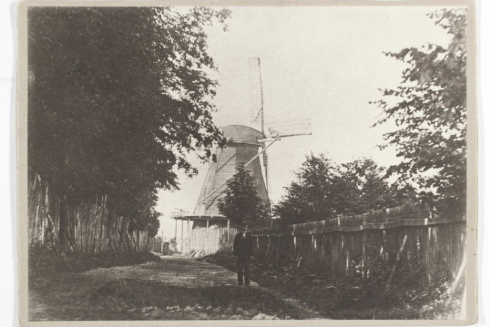
The mill of Tähtvere manor, which gave Veski street its name (veski=mill), was demolished in the 1890s (author Wilhelm Staden)
Estonian National Museum, https://opendata.muis.ee/object/654678.